
Categorías
nuevo blog
Etiquetas
Un edificio comercial grande o un proceso industrial necesita refrigeración fiable, pero el agua es escasa o costosa. ¿Qué máquina resuelve este problema y cómo funciona? Este artículo define un enfriador enfriado por aire, explica cómo funciona y lo compara con otros tipos. Un enfriador enfriado por aire es un sistema de refrigeración autónomo que utiliza aire ambiente para rechazar el calor, proporcionando simplicidad y menores costes iniciales. A diferencia de los sistemas enfriados por agua, no requiere una torre de refrigeración ni tratamiento de agua. Informes de WiseGuyReports estiman el mercado global de enfriadores enfriados por aire entre 6.16 y 6.45 mil millones de USD en 2024, lo que subraya su uso generalizado. A menudo es la opción preferida cuando el agua es escasa. Este diseño autónomo facilita la instalación y el mantenimiento.
Los enfriadores enfriados por aire rechazan el calor utilizando aire ambiente, por lo que se evitan las torres de refrigeración y los costes de tratamiento de agua.
El ciclo de compresión de vapor mueve el calor a través de las etapas de compresión, condensación, expansión y evaporación.
Las altas temperaturas ambientales reducen la eficiencia del enfriador, así que planifique para el calor extremo con bobinas sobredimensionadas o ventiladores variables.
Limpie las bobinas del condensador al menos trimestralmente para evitar una pérdida de capacidad del 5-15% y extender la vida útil del enfriador.
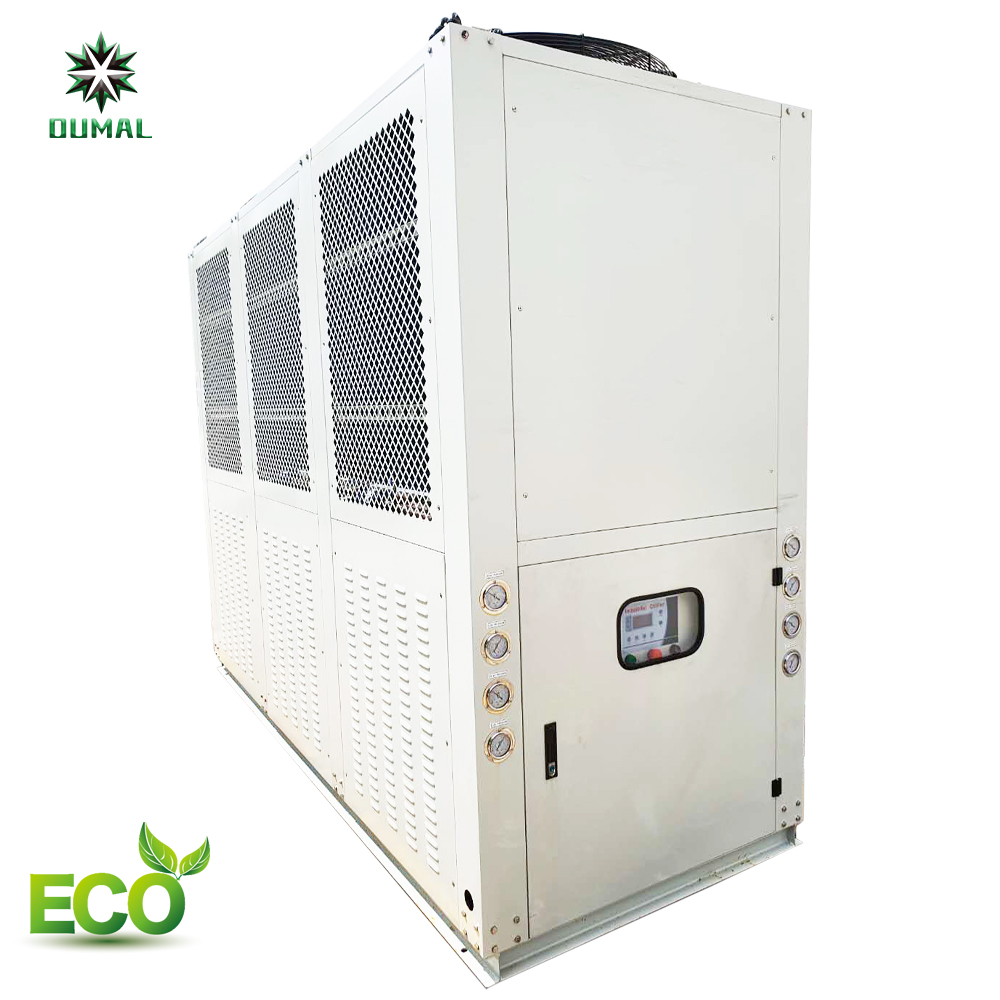
Un enfriador enfriado por aire es un sistema de refrigeración que elimina el calor de un proceso o espacio y lo rechaza al aire circundante. Este diseño elimina la necesidad de una torre de refrigeración, un sistema de agua de condensador o tratamiento de agua. La unidad utiliza ventiladores para extraer aire ambiente sobre el condensador para enfriar el refrigerante. Los fabricantes empaquetan todos los componentes en una sola unidad autónoma. Esto hace que los enfriadores enfriados por aire sean la opción preferida donde el agua es escasa o los costes de tratamiento de agua son prohibitivos.
Según fuentes de la industria, la vida útil promedio de un enfriador enfriado por aire en entornos comerciales es de entre 15 y 20 años. Un estudio de caso documentado de St. Louis confirma que una unidad, con un mantenimiento riguroso, operó a su máximo rendimiento durante 20 años.
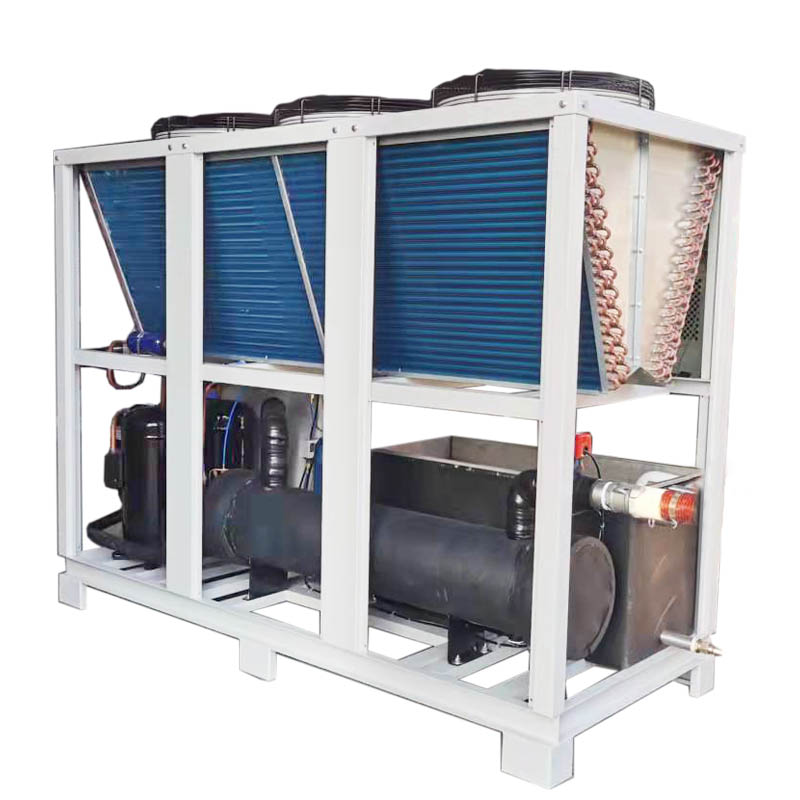
Cada enfriador enfriado por aire depende de seis componentes esenciales. Comprender estas piezas le ayuda a captar el principio de los enfriadores enfriados por aire: utilizar aire ambiente para eliminar el calor del circuito de agua de un edificio.
El compresor impulsa el flujo de refrigerante y comprime el refrigerante. Los fabricantes utilizan comúnmente compresores scroll en los enfriadores enfriados por aire. El compresor scroll ofrece una huella compacta, baja vibración, fuerte flexibilidad de carga parcial y buena eficiencia en capacidades más pequeñas. Por lo general, un compresor no es suficiente para satisfacer la carga de refrigeración, por lo que varios se unen en un banco. Esto hace que el enfriador scroll enfriado por aire sea una opción práctica para muchas aplicaciones.
El condensador actúa como un intercambiador de calor. Transfiere el calor del refrigerante al aire utilizando tubos de cobre y aletas de aluminio. Los ventiladores hacen circular aire a través del condensador para extraer el calor. Estos ventiladores afectan el ruido, el uso de energía y la eficiencia. La válvula de expansión controla el flujo de refrigerante y reduce la presión. Transforma el refrigerante en una mezcla de baja presión antes de que entre al evaporador. El evaporador extrae el calor del refrigerante y lo transfiere al agua o refrigerante. Una bomba de agua y tanque impulsan el flujo de agua y amortiguan las fluctuaciones de temperatura.
La tabla a continuación muestra las capacidades de refrigeración típicas para diferentes tipos de compresores:
|
Tipo de enfriador |
Capacidad de refrigeración típica (TR) |
Capacidad de refrigeración típica (kW) |
|---|---|---|
|
Turbocor |
60 – 1500 |
210 – 5,200 |
|
Reciprocante |
50 – 500 |
170 – 1,700 |
|
Scroll |
40 – 400 |
140 – 1,400 |
|
Screw |
70 – 600 |
250 – 2,100 |
Las diferencias clave entre un enfriador enfriado por aire y una unidad de aire acondicionado estándar radican en la capacidad de enfriamiento, la aplicación y el diseño del sistema.
Una unidad de aire acondicionado estándar funciona como un sistema autónomo. Presta servicio a un área limitada. Su escalabilidad es limitada y la eficiencia disminuye con múltiples unidades. Es adecuada para refrigeración de confort de una sola zona o a pequeña escala. Por el contrario, un enfriador industrial enfriado por aire funciona como un sistema centralizado. Puede alimentar múltiples zonas, pisos o edificios enteros. Debe dimensionar su capacidad para las temperaturas ambientales más extremas.
|
Aspecto |
Enfriador enfriado por aire |
Unidad de aire acondicionado estándar |
|---|---|---|
|
Capacidad de enfriamiento |
Sistema centralizado que alimenta múltiples zonas; capacidad dimensionada para las temperaturas ambientales más extremas |
Unidades autónomas que prestan servicio a un área limitada; escalabilidad limitada |
|
Aplicación |
Grandes cargas centralizadas: campus, edificios de gran altura, centros de datos, atención médica, industrial |
Refrigeración de confort de una sola zona o a pequeña escala |
Las plantas de agua helada no deben tener más de 300 toneladas proporcionadas por enfriadores enfriados por aire.
Un enfriador enfriado por aire maneja cargas de enfriamiento significativamente mayores. Por ejemplo, un enfriador de 200 toneladas puede enfriar múltiples máquinas de moldeo de plástico simultáneamente. Las unidades de aire acondicionado estándar sirven para una sola oficina o edificio. Los enfriadores enfriados por aire encuentran aplicación en entornos industriales, de laboratorio y médicos. Proporcionan refrigeración de procesos para equipos, láseres, reacciones químicas y centros de datos. Las unidades de aire acondicionado estándar se centran en la refrigeración de confort para entornos humanos.
Debido a las limitaciones de espacio y a los menores costos de mantenimiento, los enfriadores enfriados por aire son más comunes en edificios comerciales y residenciales multifamiliares. Para edificios de apartamentos y condominios de varios pisos, estos enfriadores presentan ventajas sobre las instalaciones de torres de enfriamiento.
Entender cómo funcionan los enfriadores enfriados por aire comienza con el ciclo de compresión de vapor. Este ciclo forma la base de todo sistema de refrigeración. Encontrará el mismo proceso básico en su refrigerador, en el aire acondicionado de su automóvil y en enormes plantas de refrigeración industrial. El principio de los enfriadores enfriados por aire se basa en cuatro etapas distintas que se repiten continuamente.
El ciclo mueve el calor de un lugar a otro utilizando un refrigerante. Este fluido cambia entre estados líquido y vapor a medida que viaja a través del sistema. Puede seguir el recorrido a través de cuatro pasos:
Compresión: El compresor toma el vapor refrigerante de baja presión y lo comprime. Esta acción aumenta drásticamente tanto la presión como la temperatura. El refrigerante sale como vapor caliente de alta presión listo para liberar calor.
Condensación: El vapor caliente entra en las bobinas del condensador. Aquí, libera su calor al aire circundante. A medida que el refrigerante se enfría, vuelve a convertirse en un líquido de alta presión.
Expansión: El líquido pasa a través de la válvula de expansión. Esta válvula crea una caída de presión repentina. El refrigerante se convierte en una mezcla fría de líquido-vapor de baja presión.
Evaporación: Esta mezcla fría fluye a través del evaporador. El evaporador absorbe el calor del agua o refrigerante en el circuito de su edificio. El refrigerante hierve y vuelve a convertirse en vapor de baja presión, listo para comenzar el ciclo nuevamente.
En los enfriadores enfriados por aire, la etapa de condensación rechaza el calor directamente al aire ambiente mediante ventiladores. Este diseño elimina la necesidad de una torre de enfriamiento separada. Obtiene una instalación más sencilla en comparación con los sistemas enfriados por agua. La funcionalidad de los enfriadores enfriados por aire depende de este intercambio de calor directo con la atmósfera.
La temperatura del aire circundante afecta directamente el rendimiento de su enfriador. Necesita una diferencia de temperatura entre el refrigerante y el aire para que ocurra la transferencia de calor. Cuando el aire se calienta, esa diferencia se reduce y el sistema trabaja más.
|
Condición ambiental |
Efecto en el rendimiento del condensador |
|---|---|
|
Alta temperatura |
Reduce la diferencia de temperatura entre la bobina y el aire, aumentando la presión de condensación y la carga de trabajo del compresor, disminuyendo el EER/COP |
|
Temperatura muy alta (p. ej., 45°C frente a 35°C de diseño) |
Reduce la capacidad de refrigeración nominal, la unidad cno puede ofrecer el rendimiento completo |
|
Alta temperatura |
Aumenta el estrés en compresores, ventiladores y componentes eléctricos, acortando su vida útil |
|
Baja temperatura (por debajo de 0°C) |
Reduce demasiado la presión del condensador, causando un funcionamiento inestable; requiere controles de presión de cabeza |
|
Humedad/calidad del aire |
El polvo, la arena o el aire corrosivo obstruyen o corroen las aletas, reduciendo la eficiencia de la transferencia de calor |
Las altas temperaturas ambientales pueden activar los dispositivos de seguridad. Estos incluyen la protección de alta presión y la protección de temperatura de escape del compresor. El sistema puede apagarse por completo, interrumpiendo su producción. Incluso sin apagarse, el compresor funciona durante más tiempo a plena carga. Los ventiladores y las bombas también operan bajo una carga elevada. Su consumo total de energía aumenta significativamente.
Puede diseñar su sistema para manejar estos desafíos. Considere estas estrategias para optimizar la disipación de calor:
Sobredimensionar las bobinas del condensador o seleccionar diseños de alta eficiencia: Las bobinas más grandes mantienen temperaturas de condensación aceptables durante eventos de calor extremo superiores a 40°C, evitando la degradación del rendimiento y los disparos del compresor.
Utilizar variadores de velocidad para los ventiladores del condensador: Esta tecnología modula la salida del ventilador en función de la temperatura ambiente y la carga en tiempo real, mejorando la eficiencia a carga parcial y reduciendo el estrés mecánico.
Especificar componentes clasificados para trabajo a alta temperatura: Los motores y rodamientos de los ventiladores del condensador deben soportar un funcionamiento continuo a temperaturas elevadas. Los sistemas eléctricos necesitan protección contra la reducción de potencia y el sobrecalentamiento.
Optimizar la carga de refrigerante: La sobrecarga conduce a condensadores inundados. La carga insuficiente causa inanición del evaporador y un funcionamiento errático del compresor.
Implementar estrategias de control avanzadas: Los controles basados en microprocesadores con control de capacidad adaptativo y control de presión de cabeza flotante ajustan dinámicamente las velocidades del compresor y el funcionamiento del ventilador.
Un enfriador industrial enfriado por aire con compresores scroll maneja bien estas demandas. El enfriador scroll enfriado por aire ofrece una gran flexibilidad de carga parcial y un funcionamiento fiable en condiciones variables. Cuando comprende cómo funcionan los enfriadores enfriados por aire, puede tomar mejores decisiones sobre el dimensionamiento, la ubicación y el mantenimiento. Sabrá por qué su sistema se comporta de manera diferente en los calurosos días de verano frente a las frescas mañanas de primavera. Este conocimiento le ayuda a planificar para condiciones pico y proteger su equipo.
Los enfriadores enfriados por agua generalmente logran una mayor eficiencia porque rechazan el calor a la temperatura de bulbo húmedo, que es más baja que la temperatura del aire ambiente de bulbo seco de la que dependen los enfriadores enfriados por aire. Esta brecha importa más en climas cálidos. Sin embargo, el panorama de costos iniciales difiere. Una planta de enfriadores enfriados por aire promedia $1,300 por tonelada, mientras que una planta enfriada por agua cuesta alrededor de $1,700 por tonelada. Para una instalación de 200 toneladas, usted enfrenta aproximadamente $260,000 para enfriado por aire frente a $340,000–$400,000 para enfriado por agua.
Los requisitos de mantenimiento también divergen. Los enfriadores enfriados por aire tienen menos componentes y no necesitan tratamiento de agua. Sin embargo, sus bobinas de condensador requieren atención regular. Las bobinas sucias reducen la capacidad en un 5–15% y se clasifican como la causa prevenible más común de pérdida de eficiencia. Debe limpiar las bobinas del condensador al menos trimestralmente. Las instalaciones cercanas a paisajes, construcción o entornos costeros pueden necesitar inspecciones mensuales. Una planta de fabricación con una suciedad moderada en la bobina que promedia una penalización energética del 12% puede desperdiciar más de $2,000 anualmente.
Su situación específica determina qué enfriador tiene sentido. En regiones con escasez de agua como el área de Beijing-Tianjin-Hebei, los enfriadores enfriados por aire eliminan por completo los costos recurrentes de agua. Las estrictas regulaciones ambientales sobre el control de Legionella también favorecen los sistemas enfriados por aire. Para operaciones intermitentes que realizan turnos de ocho horas, las unidades enfriadas por aire ofrecen un arranque rápido y no tienen preocupaciones de protección contra congelamiento en invierno.
Las limitaciones de espacio también importan. Los enfriadores enfriados por aire son autónomos y se adaptan a espacios más pequeños. Los sistemas enfriados por agua necesitan una sala mecánica interior, una torre de enfriamiento exterior y conductos de tuberías. Los tipos de enfriadores enfriados por aire disponibles incluyen configuraciones scroll, tornillo y recíprocas. Comprender estos tipos de enfriadores enfriados por aire le ayuda a adaptar la unidad a su perfil de carga. Las aplicaciones y beneficios de los enfriadores enfriados por aire se extienden a edificios comerciales, centros de datos y procesos industriales.
Para operaciones grandes y continuas que superan las 500 toneladas, los sistemas enfriados por agua suelen ofrecer una mejor economía del ciclo de vida.OUMAL ofrece ambos tipos, y su elección de enfriador depende del presupuesto, el espacio y el clima local. Seleccionar el enfriador correcto requiere un análisis cuidadoso. Un enfriador industrial enfriado por aire con compresores scroll proporciona una gran flexibilidad de carga parcial. El enfriador scroll enfriado por aire destaca en climas moderados donde la conservación del agua es importante.
Un enfriador enfriado por aire elimina el calor del circuito de agua de su edificio utilizando aire ambiente. Este diseño autónomo ofrece simplicidad y menores costos iniciales. Usted evita por completo las torres de enfriamiento y el tratamiento de agua. Las compensaciones incluyen una eficiencia ligeramente menor en climas cálidos y la limpieza regular de la bobina del condensador.
Las tendencias tecnológicas futuras apuntan hacia compresores de velocidad variable y controles inteligentes. Estas innovaciones se integran con los sistemas de gestión de edificios y la IA para la optimización energética. El monitoreo remoto habilitado por IoT respalda el mantenimiento predictivo. Los refrigerantes de bajo GWP se alinean con los objetivos de sostenibilidad.
|
Tendencia |
Impacto |
|---|---|
|
Compresores de velocidad variable |
Mejorar la eficiencia |
|
Controles inteligentes e IA |
Optimizar el uso de energía |
|
IoT y mantenimiento predictivo |
Reducir el tiempo de inactividad |
Comprender estos conceptos fundamentales le ayuda a evaluar las aplicaciones y beneficios de los enfriadores de agua (chillers) enfriados por aire. Ya sea que necesite un chiller industrial enfriado por aire, consultar a los expertos de OUMAL le ayudará a definir la elección correcta para sus necesidades.
Debe limpiar los serpentines del condensador al menos trimestralmente. Las instalaciones cercanas a zonas con paisajismo, construcción o entornos costeros pueden necesitar inspecciones mensuales. Los serpentines sucios reducen la capacidad entre un 5% y un 15%. La limpieza regular previene la pérdida de eficiencia y prolonga la vida útil del equipo.
Sí, pero necesita controles de presión de condensación. Las temperaturas ambiente bajas por debajo de 0 °C pueden hacer que la presión del condensador baje demasiado, provocando un funcionamiento inestable. Estos controles mantienen los niveles de presión adecuados. Su chiller seguirá funcionando de manera confiable incluso durante los meses de invierno.
Debe dimensionar su chiller para las peores condiciones de temperatura ambiente. Considere su carga de enfriamiento máxima, el clima local y los planes de expansión futura. Una unidad de 200 toneladas puede enfriar múltiples máquinas de moldeo de plástico simultáneamente. Consulte a un experto para calcular sus requerimientos exactos.
Con el mantenimiento adecuado, se esperan entre 15 y 20 años de servicio. Un caso documentado en St. Louis operó a su máximo rendimiento durante 20 años. La limpieza regular, la revisión de refrigerante y la inspección de componentes maximizan la vida útil de su chiller.
Debe inspeccionar los niveles de refrigerante, revisar los motores de los ventiladores y sus rodamientos, y verificar las conexiones eléctricas periódicamente. Un chiller industrial enfriado por aire con compresores scroll requiere una atención mínima en comparación con los sistemas enfriados por agua. No aplica tratamiento de agua ni mantenimiento de torre de enfriamiento. Un chiller scroll enfriado por aire ofrece un funcionamiento confiable con un mantenimiento sencillo.



 es
es en
en