

Categorías
nuevo blog
Etiquetas
You should prioritize corrosion-resistant coils and coatings, sealed enclosures, corrosion-rated fans and fasteners, correct sizing, and a maintenance plan built around frequent cleaning and inspection. Salt-laden air carries microscopic droplets inland and leaves chloride residue on metal surfaces. Chloride meets copper tubing and aluminum fins, and galvanic corrosion begins. Fins pit and flake away. Copper develops pinhole leaks. Cool Air Services notes that an unprotected unit may fail in as little as 5 to 7 years instead of 12 to 15. Even a 0.2–0.3 mm dust layer on the fins raises heat transfer resistance by 25–40 percent, according to Evroprom. This guide serves industrial engineers, facility managers, and procurement specialists choosing an industrial Air-Cooled Screw Chiller.
Cooling capacity is the first decision you make, and it sets the ceiling on everything that follows. An undersized unit runs near its limit all day, so the compressor cycles hard, efficiency drops, and wear accelerates. An oversized unit short-cycles, wastes energy, and controls temperature poorly. Calculate your peak and average loads from real process data, not from a nameplate on the old machine. Add a sensible margin for future expansion, then confirm the result against a catalog model. A 60TR air-cooled screw chiller suits a mid-sized process loop, for example, while a larger plant may need several units staged in parallel.
Capacity alone does not define a workable machine. You must also specify the process fluid type, the required process cooling temperature, the flow rate, the pressure drop you can tolerate, the outlet water temperature, and the operating voltage at your site. These inputs determine heat exchanger selection, pump sizing, and electrical configuration. Give the supplier your worst-case conditions, not your average ones. Where load varies through the day or the season, ask about variable speed screw chillers. A variable speed drive lets the compressor match output to demand, and that flexibility often pays back on part-load operation. Confirm every value in writing before you approve the order for any industrial air cooled screw chiller.
Define your site before you compare models. Measure or estimate the salinity level, the humidity range, the temperature swing, and the distance from the shoreline. Distance matters because salt mist concentration falls with inland distance, yet wind patterns can carry chloride far beyond the beach. Salinity Ocean Sciences describes several measurement routes. A complete chemical analysis works but is difficult and time consuming. You cannot simply evaporate seawater to weigh the dry salt mass, because chlorides are lost during that process. Fondriest Environmental explains that salinity is usually derived from a conductivity measurement instead. That derived value is called practical salinity, and it is unitless but often written with practical salinity units (psu). A newer method adopted in 2010, TEOS-10, determines absolute salinity and gives a more accurate and consistent picture. For chiller selection, a conductivity-based estimate plus your local weather records is usually enough to set a corrosion class.
Salt mist is only one part of the load on an industrial air cooled screw chiller. Dust, sand, pollen, and industrial exhaust all settle on the coil face and pack into the fin gaps. That fouling layer insulates the coil, raises condensing pressure, and forces the compressor to work harder. Contaminants also find their way into the electrical enclosure through cable entries and panel seams. Exposure varies by site, so treat a rooftop position facing the sea differently from a sheltered ground-level pad behind a building. A stainless steel air cooled chiller suits the harshest of these positions, where chloride load and wetting are continuous. Walk the proposed location, note the prevailing wind direction, and record nearby exhaust stacks before you finalize the specification.
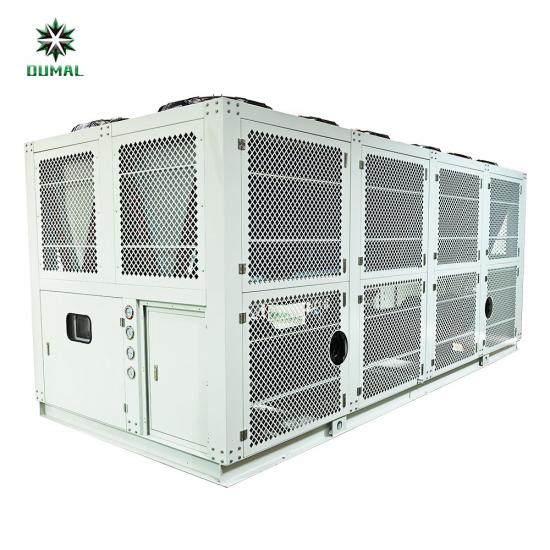
The coil takes the worst of the salt attack, so match its protection to your measured salinity. Bare aluminum fins suit dry, clean inland air, where they typically last 5–8 years according to Vrcoolertech. Factory-applied polyurethane coatings such as Blue Fin encapsulate the aluminum and cut the electrochemical path to the copper tubes; Quincysair places this option at sites up to 1 mi from water, with a cost premium of $300–$800. Phenolic-epoxy coatings like Heresite P-413 resist salt, acids, and alkalis, and they fit beachfront or industrial positions at a premium of $400–$900. Epoxy e-coat achieves 100% surface coverage and penetrates fin edges that spray coatings miss, which makes it the choice for heavy salt exposure at $500–$1,000. Vrcoolertech rates epoxy-coated coils for 15+ years in extreme environments. Where chloride load is continuous and wetting never stops, specify a stainless steel air cooled chiller with stainless tube options. OUMAL publishes coating and material guidance by application, and that guidance gives you a useful cross-check on any supplier's recommendation.
|
Coating |
Coverage |
Best Environment |
Cost Premium |
|---|---|---|---|
|
Blue Fin (polyurethane) |
Good |
Up to 1 mi from water |
$300–$800 |
|
Heresite P-413 |
Very good |
Beachfront / industrial |
$400–$900 |
|
Epoxy e-coat |
Best — 100% surface |
Beachfront / heavy salt |
$500–$1,000 |
Every external component faces the same chloride load as the coil. Specify fan blades in a material that will not pit, choose a frame finish rated for your corrosion class, and insist on fastener grades that match the frame. Mixing dissimilar metals accelerates attack, and AKCP explains why: in the presence of an electrolyte such as saltwater, ions of the less noble metal flow toward the more noble one, and the less noble metal oxidizes. Copper and aluminum combinations are particularly vulnerable. Apply three countermeasures when you review the specification for any Air-Cooled Screw Chiller:
Ask the supplier to document where dissimilar metals meet and how the design isolates them. That single question exposes weak designs quickly.
Salt and moisture enter an industrial air cooled screw chiller through the smallest gaps. Check the IP rating on the electrical enclosure and confirm it suits your site's humidity and spray exposure. Route drainage so water falls away from the unit, not toward it. Buildiyo notes that coastal buildings rely on fall drainage away from the structure and marine-grade materials in gutters and joints. Apply the same logic to the chiller pad and condensate paths. Place sensitive components away from the coil face, where wind-driven mist lands first. Seal cable entries and panel seams with marine-grade sealant rather than general-purpose silicone. Buildiyo warns that salt-laden moisture entering a gap corrodes fixings from behind, where you cannot see the damage until movement appears. The same hidden corrosion applies to enclosure hardware.
Coastal coils foul faster than inland coils, so serviceability decides long-term performance. Look for removable panels, clear coil access for cleaning, and drain locations you can reach without dismantling the unit. A design that forces you to remove fan guards to wash the coil will get cleaned less often.
The high-pressure cut-out protects the compressor when discharge pressure climbs too high. Restricted airflow, dirty coils, and high ambient heat all raise that pressure. The switch interrupts compressor power once pressure crosses a set threshold. For standard R410A systems, Alibaba's buying guide lists cut-out points of 590–650 psig, with reset 150–180 psig below the opening point. Specify an encapsulated switch rated IP65 or higher, because moisture degrades internal contacts in coastal air. Confirm compliance with AHRI 110 and UL 60335-2-40. On a hot, contaminated site, this control is your last line of defense for the compressor.
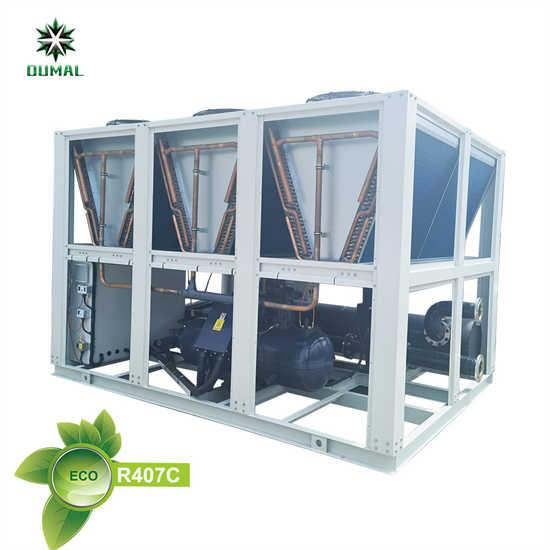
Choose your maintenance strategy before you sign the purchase order. Fortress HVAC separates the options clearly: reactive work responds to breakdowns with no planning, preventive work follows scheduled intervals, and predictive work uses data trending to service a unit before failure. Coastal sites push you toward the preventive and predictive end of that range. Salt fouling builds faster than inland fouling, so coil cleaning and inspection must happen more often. Fortress HVAC notes that skipping scheduled maintenance costs more in emergency repairs and lost production than preventive service does.
The financial gap is wide. Oxmaint reports that reactive maintenance costs 3–5 times more than planned work, and that comprehensive preventive programs cut total maintenance costs by 50 percent compared to reactive approaches, per a DOE estimate. Oxmaint also puts preventive plan ROI at roughly 545 percent per dollar invested. Budget benchmarks from Oxmaint help you sanity-check a quote:
|
Chiller Size |
Basic Plan (Annual) |
Full-Coverage (Annual) |
|---|---|---|
|
Chiller (50–200 ton) |
$2,000–$5,000 |
$6,000–$15,000 |
Oxmaint gives an industry average of $50–$120 per ton annually. A figure above $120 signals aging equipment or an overpriced vendor. Full-coverage contracts cap your maximum spend and suit units aged 10 years or more, where parts failures grow more frequent.
Confirm three compliance layers for any Air-Cooled Screw Chiller. Electrical safety standards govern the enclosure, wiring, and protection devices. Environmental regulations restrict which refrigerants you may use and how you handle them. Local building and mechanical codes set siting, clearance, and permitting rules. Ask the supplier for a declaration of conformity and check it against your jurisdiction's requirements.
Total cost of ownership extends well beyond the invoice. Add initial cost, maintenance spend, energy efficiency, and expected lifespan into one comparison. The lowest purchase price rarely wins on lifecycle cost. A cheap unit with thin coil protection may need early replacement, and Fortress HVAC's $5,000-per-ton rule flags when repair costs justify replacement analysis instead. OUMAL service support is one option worth evaluating alongside local contractors.
A checklist turns a long specification into a repeatable decision. Use the matrix below as a starting point, then adjust it against your own site readings. The coating and material columns follow the guidance established earlier in this guide. The maintenance column reflects the fouling rate you should expect at each exposure level.
|
Salinity Level |
Coil Coating |
Frame and Fastener Material |
Coil Cleaning Frequency |
|---|---|---|---|
|
Low (inland, dry) |
Bare aluminum |
Standard finish, matched fasteners |
Seasonal |
|
Moderate (within 1 mi of water) |
Blue Fin polyurethane |
Corrosion-rated finish, matched grades |
Quarterly |
|
High (beachfront, industrial) |
Heresite P-413 or epoxy e-coat |
Marine-grade finish, isolated dissimilar metals |
Monthly |
|
Severe (continuous salt wetting) |
Epoxy e-coat with stainless tube option |
Stainless frame and fasteners |
Monthly, with inspection after storms |
Treat the frequency column as a floor, not a target. A unit downwind of surf spray will foul faster than the table suggests.
Ask every supplier the same questions, and record the answers in writing. Start with the coating warranty: what it covers, how long it runs, and what voids it. Request salt-spray test data for the specific coating, not a generic brochure claim. Confirm the service network covers your region and holds spare coils, fan motors, and control boards locally. Ask about lead times for the unit and for critical spares, because a six-week wait for a coil extends an outage.
Then test the design itself. Ask where dissimilar metals meet and how the build isolates them. Request the IP rating of the electrical enclosure and the cut-out setting of the high-pressure switch. A supplier who answers these questions with documents, rather than assurances, is the one to shortlist for your Air-Cooled Screw Chiller.
Follow the steps in order. Size the chiller correctly, assess site conditions, match corrosion protection to salinity, verify design and safety features, plan maintenance, confirm compliance, and compare total cost of ownership.
Correct sizing plus corrosion protection drives reliability and lifecycle cost in salt-heavy environments. A well-protected Air-Cooled Screw Chiller lasts longer and needs fewer emergency repairs.
Consult suppliers such as OUMAL for application-specific advice. Salinity, contaminants, and duty cycles vary by site, so your specification should reflect your own readings.
Clean monthly at beachfront or industrial sites, and inspect after every storm. Inland sites can follow a seasonal schedule. Treat any published interval as a floor, not a target. A unit downwind of surf spray will foul faster than the schedule suggests.
No. The coil and the frame face the same chloride load. A coated coil protects the fin pack, yet fasteners and panels still corrode. Match every external component to your salinity class, and isolate dissimilar metals wherever they meet.
It stops the compressor when discharge pressure crosses a set threshold. Dirty coils, restricted airflow, and high ambient heat all push that pressure upward. Specify an encapsulated switch rated IP65 or higher, since moisture degrades internal contacts in coastal air.
Yes, on lifecycle cost. A cheap unit with thin coil protection may need early replacement, and the $5,000-per-ton rule flags when repair costs justify replacement analysis. Compare initial cost, maintenance, energy, and lifespan together, not the invoice alone.
Ask for a declaration of conformity and check it against your jurisdiction. Electrical safety standards govern the enclosure, wiring, and protection devices. Environmental regulations restrict refrigerant choice and handling. Local building and mechanical codes set siting, clearance, and permitting rules.



 es
 en