Categorías
nuevo blog
Etiquetas
Debe elegir el enfriador adecuado en función del tamaño de su proyecto, los objetivos de eficiencia, el presupuesto y la aplicación. Los enfriadores centrífugos ofrecen alta eficiencia y una larga vida útil para edificios grandes o instalaciones industriales. Los enfriadores refrigerados por aire funcionan bien para espacios más pequeños o ubicaciones con espacio limitado. OUMAL puede ayudarle a seleccionar el mejor enfriador para sus necesidades.
Elija enfriadores centrífugos para proyectos grandes que necesiten alta eficiencia y fiabilidad a largo plazo.
Seleccione enfriadores refrigerados por aire para espacios más pequeños o instalaciones temporales debido a su instalación más sencilla.
Considere la eficiencia energética y los costos operativos a largo plazo al decidir entre tipos de enfriadores.
Evalúe el espacio de instalación y las necesidades de mantenimiento para encontrar el mejor enfriador para su proyecto.
Consulte a OUMAL para obtener orientación experta adaptada a sus requisitos específicos de refrigeración.
Cuando compare diferentes tipos de enfriadores, la eficiencia energética destaca como un factor clave. Desea un enfriador que mantenga fresco su edificio o centro de datos mientras utiliza menos electricidad. La eficiencia del enfriador afecta sus costos operativos y el impacto ambiental. OUMAL ofrece soluciones que le ayudan a maximizar el rendimiento para su aplicación específica.
Los enfriadores centrífugos ofrecen una alta eficiencia energética, especialmente en sistemas HVAC de gran escala. A menudo verá estos enfriadores en edificios comerciales, hospitales y centros de datos. Utilizan agua como medio de refrigeración, lo que les permite funcionar con un menor consumo de energía. Puede ver su rendimiento en la tabla siguiente:
|
Tipo de enfriador |
Eficiencia a plena carga (kW/tonelada) |
COP (carga completa) |
|---|---|---|
|
Enfriador centrífugo refrigerado por agua |
0.55 - 0.75 |
4.7 - 6.4 |
Obtiene un coeficiente de rendimiento (COP) más alto con los enfriadores centrífugos. Esto significa que ahorra más energía con el tiempo. Para instalaciones grandes, los enfriadores refrigerados por agua son generalmente más eficientes que los enfriadores refrigerados por aire. Se beneficia de facturas de servicios públicos más bajas y una menor huella de carbono.
Consejo: Los enfriadores centrífugos funcionan mejor cuando la carga de refrigeración es alta y constante. Debe considerarlos para grandes torres de oficinas o instalaciones industriales.
Los enfriadores refrigerados por aire ofrecen un diseño más sencillo y una instalación más fácil. A menudo elige estos enfriadores para edificios más pequeños o lugares con espacio limitado. Los enfriadores refrigerados por aire utilizan ventiladores para eliminar el calor, lo que puede hacerlos menos eficientes que los sistemas refrigerados por agua. La tabla siguiente muestra los niveles de eficiencia habituales:
|
Tipo de enfriador |
Nivel de eficiencia |
|---|---|
|
Enfriadores refrigerados por agua |
Generalmente más eficientes para aplicaciones más grandes |
|
Enfriadores refrigerados por aire |
A menudo menos eficientes que los sistemas refrigerados por agua |
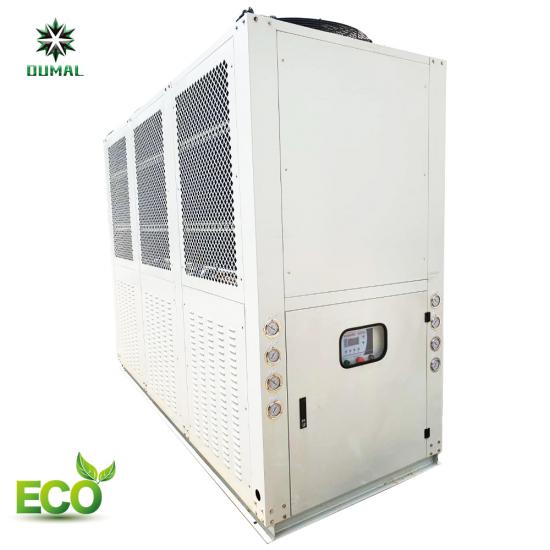
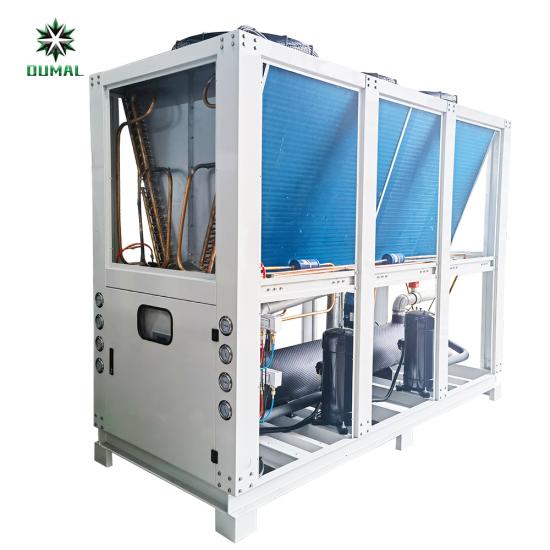
Puede encontrar opciones como enfriador portátil refrigerado por aire y enfriador industrial refrigerado por aire. Estos modelos son adecuados para proyectos donde la flexibilidad y la movilidad son importantes. Aunque los enfriadores refrigerados por aire suelen tener una menor eficiencia de refrigeración, obtiene ventajas en instalación y mantenimiento. Puede colocarlos en exteriores, ahorrando espacio interior.
Nota: Si necesita un enfriador para una oficina pequeña o una instalación temporal, los enfriadores refrigerados por aire proporcionan una solución práctica.
Debe sopesar sus necesidades de eficiencia energética frente a sus requisitos de espacio y aplicación. OUMAL puede ayudarle a seleccionar el enfriador adecuado para su proyecto.
Elegir el enfriador adecuado implica comprender cómo los requisitos de instalación y espacio afectan su proyecto. Debe considerar la complejidad de instalar diferentes tipos de enfriadores, el medio de refrigeración utilizado y el espacio que ocupa cada enfriador. Estos factores desempeñan un papel importante en la eficiencia general y la practicidad de su sistema HVAC, especialmente en un centro de datos o edificio comercial.
Los enfriadores centrífugos requieren un proceso de instalación más complejo. Debe configurar una planta central completa, que incluye una sala mecánica, bombas de agua fría, torre de refrigeración y otros componentes. Esta configuración funciona mejor para instalaciones grandes donde dispone de suficiente espacio y recursos. A menudo verá enfriadores centrífugos en edificios de gran altura, hospitales y centros de datos. El proceso de instalación implica una planificación cuidadosa y coordinación con múltiples contratistas.
Aquí hay una comparación de los requisitos de instalación:
|
Tipo de enfriador |
Requisitos de instalación |
|---|---|
|
Enfriador aire-aire |
Requiere losa exterior, espacio adecuado para el flujo de aire, servicio eléctrico, tuberías de agua fría y más. |
|
Enfriador centrífugo agua-agua |
Requiere una planta central completa, sala mecánica, bombas de agua fría, torre de enfriamiento y componentes adicionales. |
Consejo: Los enfriadores centrífugos son adecuados para proyectos donde se necesita alta capacidad de enfriamiento y hay suficiente espacio interior para una planta central.
Los enfriadores aire-aire ofrecen una instalación más simple y flexible. Normalmente se colocan al aire libre, lo que ahorra espacio valioso en el interior. Se necesita una losa exterior, espacio adecuado para el flujo de aire y acceso al servicio eléctrico. Los enfriadores aire-aire funcionan bien en lugares con espacio limitado o donde se desea evitar construir una sala mecánica. Los modelos portátiles proporcionan flexibilidad adicional para instalaciones temporales o proyectos que requieren movilidad. Las unidades industriales aire-aire se adaptan a sitios industriales que necesitan enfriamiento confiable sin infraestructura compleja.
Se beneficia de una instalación y mantenimiento más fáciles con los enfriadores aire-aire. Puede configurar rápidamente estos enfriadores para pequeñas oficinas, espacios comerciales o eventos temporales. También evita la necesidad de torres de enfriamiento, lo que reduce el tiempo y costo de instalación.
Nota: Los enfriadores aire-aire pueden ocupar más espacio al aire libre, por lo que debe planificar suficiente espacio y flujo de aire adecuado.
Debe evaluar el espacio y los requisitos de instalación de su proyecto antes de elegir un enfriador. OUMAL puede ayudarle a seleccionar el mejor enfriador para su aplicación.
Al comparar diferentes tipos de enfriadores, el costo juega un papel importante en su decisión. Debe considerar tanto la inversión inicial como los gastos a largo plazo. OUMAL ofrece soluciones rentables para cada proyecto, ya sea que administre un gran centro de datos o una pequeña oficina.
Notará una diferencia clara en los costos iniciales entre los enfriadores centrífugos y los aire-aire. Los enfriadores centrífugos generalmente requieren una inversión inicial más alta. Esto ocurre porque se necesita una planta central, torres de enfriamiento y equipo adicional. Estos enfriadores son adecuados para edificios grandes o instalaciones con alta demanda de enfriamiento. Si elige un enfriador aire-aire, normalmente paga menos al inicio. Los enfriadores aire-aire, incluidos los modelos portátiles y los industriales, requieren menos infraestructura. Puede instalarlos rápidamente, lo que ahorra en mano de obra y materiales.
Consejo: Si su proyecto tiene un presupuesto ajustado o espacio limitado, los enfriadores aire-aire ofrecen una solución práctica y económica.
Aunque los enfriadores aire-aire cuestan menos de instalar, debe considerar los gastos a largo plazo. Los enfriadores centrífugos a menudo ofrecen mejor eficiencia energética, especialmente en sistemas HVAC a gran escala. Con el tiempo, puede ahorrar más en electricidad y mantenimiento. La tabla a continuación compara los costos operativos anuales de sistemas agua-agua y aire-aire en edificios comerciales:
|
Componente de costo |
Sistema de enfriador agua-agua |
Sistema VRF aire-aire |
|---|---|---|
|
Costo anual de electricidad |
$361,700.00 |
$417,000.00 |
|
Costo anual de agua |
$12,300.00 |
– |
|
Mantenimiento anual |
$16,200.00 |
$31,700.00 |
|
Costo operativo total |
$390,200.00 |
$448,700.00 |
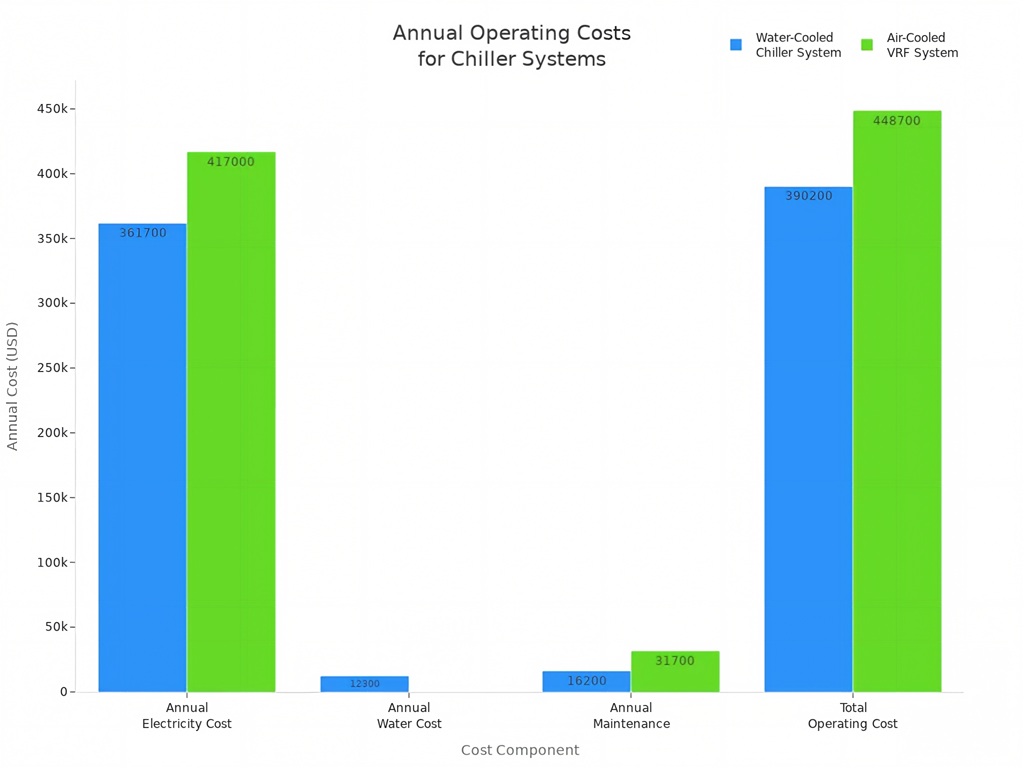
Puede ver que los enfriadores centrífugos, que son agua-agua, tienen costos operativos totales más bajos con el tiempo. Los enfriadores aire-aire pueden parecer más económicos al principio, pero los mayores costos de electricidad y mantenimiento pueden acumularse. Si administra una instalación grande o un centro de datos, invertir en un enfriador más eficiente puede generar ahorros a largo plazo.
Nota: Siempre equilibre su presupuesto inicial con sus objetivos a largo plazo. OUMAL puede ayudarle a elegir el enfriador adecuado para sus necesidades.
Debe considerar el mantenimiento al elegir entre diferentes tipos de enfriadores. El mantenimiento afecta la confiabilidad, el costo y la vida útil de su enfriador. OUMAL proporciona opciones de soporte y servicio para ayudarle a mantener su sistema funcionando correctamente.
Los enfriadores centrífugos requieren un mantenimiento regular y detallado. Debe revisar varios componentes para garantizar un funcionamiento eficiente. Estas son algunas tareas comunes que debe realizar:
Inspeccione las tuberías y los accesorios del refrigerante en busca de residuos de aceite, escarcha o manchas. Estos signos pueden indicar fugas.
Pruebe el interruptor de flujo de agua enfriada y verifique que funcione con los controles del compresor.
Compruebe el caudal de agua del condensador y compárelo con las especificaciones de diseño del sistema.
Inspeccione los paneles de control eléctrico en busca de decoloración, cableado suelto o indicadores de disparo.
Verifique el nivel de aceite en el visor del compresor y mantenga registros a lo largo del tiempo.
Revise los registros del sistema de automatización del edificio para confirmar que los datos sean precisos.
Inspeccione las almohadillas aisladoras de vibración y los pernos de montaje en busca de desgaste o aflojamiento.
Realice una inspección completa de detección de fugas de refrigerante utilizando herramientas electrónicas o tinte UV.
Mida y registre los valores de sobrecalentamiento y subenfriamiento del compresor.
También debe comprobar el control de temperatura del agua enfriada, inspeccionar las correas y poleas para verificar la tensión y la alineación, y escuchar si hay ruidos o vibraciones inusuales. Estos pasos le ayudan a prevenir averías y prolongar la vida útil de su enfriador. Los enfriadores centrífugos suelen necesitar técnicos especializados para el servicio, especialmente en grandes sistemas hvac.
Consejo: Programe inspecciones rutinarias y mantenga registros detallados para evitar reparaciones costosas.
Los enfriadores enfriados por aire ofrecen un mantenimiento más sencillo en comparación con los modelos enfriados por agua. No necesita gestionar torres de enfriamiento, lo que reduce la complejidad. Puede mantener unidades de enfriadores portátiles enfriados por aire y enfriadores industriales enfriados por aire con herramientas básicas y menos tiempo de inactividad. Estas son algunas tareas en las que debe centrarse:
Inspeccione las aletas de las bobinas del condensador en busca de residuos y daños físicos.
Compruebe los controladores de velocidad de los ventiladores y escuche si hay ruidos inusuales.
Inspeccione las correas, las poleas y la estructura de la unidad en busca de desgaste.
Verifique el control de temperatura del agua enfriada.
Puede realizar la mayoría de las tareas de mantenimiento en exteriores, lo que ahorra tiempo. Los enfriadores enfriados por aire tienen menos componentes, por lo que dedica menos tiempo al servicio. Puede limpiar rápidamente las bobinas y revisar los controles. Los modelos de enfriadores portátiles enfriados por aire facilitan el traslado de unidades para limpieza o reparaciones. Las unidades de enfriadores industriales enfriados por aire están diseñadas para ofrecer fiabilidad y un mantenimiento sencillo en entornos exigentes.
Nota: Los enfriadores enfriados por aire son una buena opción si desea reducir el tiempo y los costos de mantenimiento.
OUMAL ofrece soporte para todos los tipos de enfriadores. Puede ponerse en contacto con su equipo para obtener planes de mantenimiento y ayuda para la resolución de problemas.
Cuando elige un enfriador para su edificio, desea saber cuánto tiempo durará y qué tan fiable será. Los diferentes tipos de enfriadores ofrecen distintas vidas útiles y niveles de fiabilidad. Su decisión puede afectar sus costos a largo plazo y el rendimiento de su sistema hvac, especialmente en entornos exigentes como un centro de datos.
Los enfriadores centrífugos destacan por su larga vida útil. Si sigue un plan estructurado de mantenimiento preventivo, puede esperar que estos enfriadores duren 30 años o más. Muchos enfriadores centrífugos enfriados por agua han funcionado durante más de 25 años en entornos comerciales e industriales. Sin embargo, si solo realiza mantenimiento reactivo, la vida útil se reduce a unos 15 a 18 años. Estos enfriadores son conocidos por su diseño robusto y alta fiabilidad. Mantienen una alta eficiencia en todo su rango de funcionamiento y proporcionan una capacidad de enfriamiento significativa por pie cuadrado de espacio mecánico.
Consejo: El mantenimiento preventivo regular le ayuda a maximizar la vida útil y la fiabilidad de su enfriador centrífugo.
OUMAL fabrica enfriadores centrífugos que cumplen estrictos estándares de fiabilidad, por lo que puede confiar en que su sistema funcionará año tras año.
Los enfriadores enfriados por aire, como los modelos de enfriador portátil enfriado por aire y enfriador industrial enfriado por aire, ofrecen una solución práctica para muchas aplicaciones. Estos enfriadores suelen utilizar varios compresores. Si falla un compresor, los demás mantienen el enfriador en funcionamiento, aunque con una capacidad reducida. Este diseño aumenta la fiabilidad de su sistema. La vida útil típica de los enfriadores enfriados por aire oscila entre 15 y 20 años con un cuidado adecuado. Puede descubrir que los enfriadores enfriados por aire requieren un mantenimiento menos complejo, lo que puede ayudarle a prolongar su vida útil. Sin embargo, normalmente no duran tanto como los enfriadores centrífugos.
Los enfriadores enfriados por aire proporcionan flexibilidad y una instalación sencilla.
Varios compresores mejoran la fiabilidad.
Un mantenimiento adecuado prolonga la vida útil.
Los enfriadores enfriados por aire de OUMAL cumplen altos estándares de fiabilidad, brindándole tranquilidad para sus necesidades de enfriamiento.
Debe considerar los niveles de ruido al seleccionar un enfriador para su edificio o instalación. El ruido puede afectar la comodidad, la productividad e incluso las normativas locales. Los diferentes tipos de enfriadores producen distintas cantidades de sonido durante el funcionamiento. Esto es lo que necesita saber sobre la emisión de ruido:
Los enfriadores de agua suelen producir niveles de ruido entre 50 dB y 90 dB.
Los enfriadores más pequeños de grado residencial funcionan a unos 50-60 dB, lo que es similar a una conversación tranquila.
Los enfriadores industriales grandes pueden alcanzar hasta 90 dB o más, lo que equivale al ruido del tráfico intenso.
Los enfriadores centrífugos suelen funcionar silenciosamente cuando se instalan en interiores con un aislamiento acústico adecuado. Puede notar que los enfriadores enfriados por aire, como el enfriador portátil enfriado por aire y el enfriador industrial enfriado por aire, pueden ser más ruidosos. Estas unidades utilizan ventiladores para mover el aire, lo que aumenta los niveles de sonido, especialmente en exteriores. Si instala enfriadores enfriados por aire cerca de oficinas o zonas residenciales, debe planificar medidas de control de ruido como barreras o cerramientos.
Consejo: Siempre verifica las normativas locales sobre ruido antes de instalar un enfriador, especialmente si tu proyecto se encuentra en un área sensible al ruido.
También debes pensar en el impacto ambiental de tu elección de enfriador. Los enfriadores centrífugos refrigerados por agua utilizan agua como medio de enfriamiento, lo que puede ser más eficiente energéticamente y reducir las emisiones de gases de efecto invernadero. Estos enfriadores suelen admitir grandes sistemas hvac y ayudan a reducir la huella de carbono de tu edificio.
Los enfriadores refrigerados por aire, incluidos los modelos de enfriador portátil refrigerado por aire y enfriador industrial refrigerado por aire, no requieren torres de enfriamiento ni grandes suministros de agua. Esta característica los hace adecuados para áreas con restricciones de agua. Sin embargo, los enfriadores refrigerados por aire pueden consumir más electricidad y liberar más calor al entorno circundante. Debes sopesar estos factores al elegir entre diferentes tipos de enfriadores.
OUMAL sigue comprometida con las soluciones sostenibles. Puedes encontrar enfriadores diseñados para la eficiencia energética, bajo nivel de ruido y un impacto ambiental mínimo. Al elegir el enfriador adecuado, apoyas tanto las necesidades de tu proyecto como al planeta.
Seleccionar el enfriador adecuado para tu proyecto depende de varios factores importantes. Debes adaptar el enfriador a tu carga de enfriamiento, espacio disponible, presupuesto y las necesidades específicas de tu aplicación. Cada tipo de enfriador ofrece ventajas únicas, por lo que comprender dónde destaca cada uno te ayudará a tomar la mejor decisión para tu sistema hvac.
Debes considerar los enfriadores centrífugos cuando tu proyecto requiera una alta capacidad de enfriamiento y fiabilidad a largo plazo. Estos enfriadores funcionan mejor en entornos donde la eficiencia energética y la eficiencia del enfriador son prioridades principales. Los enfriadores centrífugos suelen preferirse para cargas de enfriamiento más grandes porque mantienen un alto rendimiento incluso cuando aumenta la demanda. Los sistemas refrigerados por agua, que incluyen enfriadores centrífugos, pueden lograr un enfoque de temperatura más ajustado, lo que los hace más eficientes para necesidades importantes de enfriamiento.
A menudo encontrarás enfriadores centrífugos en los siguientes entornos:
Centros de datos
Instalaciones de fabricación
Grandes edificios comerciales
Plantas industriales
Sistemas de enfriamiento central
Los enfriadores centrífugos requieren una sala mecánica dedicada y torres de enfriamiento, por lo que necesitas suficiente espacio interior para la instalación. Estos enfriadores funcionan silenciosamente, lo que los hace adecuados para entornos sensibles al ruido como hospitales y torres de oficinas. Si tu instalación tiene una carga de enfriamiento grande y constante y quieres minimizar los costos operativos a largo plazo, los enfriadores centrífugos ofrecen la mejor solución. Su mayor vida útil y menores costos del ciclo de vida los convierten en una inversión inteligente para plantas medianas y grandes.
Consejo: Evalúa tu carga de enfriamiento y el espacio disponible antes de elegir un enfriador centrífugo. Si gestionas un centro de datos o un sitio industrial grande, este tipo de enfriador probablemente ofrecerá los mejores resultados.
Los enfriadores refrigerados por aire ofrecen flexibilidad y simplicidad, lo que los hace ideales para sistemas más pequeños o proyectos con espacio de instalación limitado. Puedes instalar estos enfriadores en exteriores, como en azoteas o estacionamientos, lo que ahorra valioso espacio interior. Los enfriadores refrigerados por aire generalmente tienen costos iniciales más bajos porque no requieren torres de enfriamiento ni tuberías complejas. Esto los convierte en una opción práctica para proyectos con presupuestos ajustados o plazos rápidos.
Debes elegir enfriadores refrigerados por aire en estos escenarios:
Edificios de oficinas pequeños y medianos
Espacios comerciales
Escuelas y universidades
Instalaciones temporales
Instalaciones con espacio interior limitado
Si necesitas una solución fácil de mover o instalar rápidamente, un enfriador portátil refrigerado por aire es una excelente opción. Este tipo de enfriador funciona bien para eventos, sitios de construcción o necesidades de enfriamiento temporales. Para entornos industriales que requieren enfriamiento fiable pero no cuentan con la infraestructura para sistemas refrigerados por agua, un enfriador industrial refrigerado por aire proporciona un rendimiento sólido y un mantenimiento sencillo.
Los enfriadores refrigerados por aire funcionan utilizando aire ambiental, lo que puede generar temperaturas operativas más altas y un mayor consumo de energía en comparación con los sistemas refrigerados por agua. Sin embargo, su diseño sencillo y sus menores necesidades de mantenimiento los hacen atractivos para muchas aplicaciones. También debes considerar los niveles de ruido, ya que los enfriadores refrigerados por aire pueden ser más ruidosos que los enfriadores centrífugos, especialmente en entornos exteriores.
Nota: Siempre evalúa la capacidad de enfriamiento de tu proyecto, el espacio disponible y los requisitos de ruido. Si necesitas una solución flexible y rentable, los enfriadores refrigerados por aire, incluidos los modelos de enfriador portátil refrigerado por aire y enfriador industrial refrigerado por aire, son opciones sólidas.
Al decidir entre diferentes tipos de enfriadores, ten en cuenta estos factores principales:
Costos iniciales
Eficiencia energética
Niveles de ruido
Vida útil del equipo
Complejidad del sistema
Requisitos de espacio
Necesidades de mantenimiento
Los expertos de la industria recomiendan que:
Determines el rango de temperatura requerido para tu aplicación.
Evalúes la capacidad de enfriamiento necesaria según el tamaño de tu área.
Reevalúe periódicamente sus opciones para garantizar que su enfriadora siga cumpliendo con sus necesidades operativas.
Si tiene una alta carga de refrigeración y suficiente espacio para una planta central, es probable que las enfriadoras centrífugas ofrezcan el mejor rendimiento y los costos más bajos a largo plazo. Para cargas más pequeñas, espacio limitado o necesidades temporales, las enfriadoras refrigeradas por aire, incluidos los modelos de enfriadora portátil refrigerada por aire y enfriadora industrial refrigerada por aire, proporcionan una solución práctica y eficiente.
Para obtener recomendaciones personalizadas y orientación experta, consulte a OUMAL. Su equipo puede ayudarle a analizar sus requisitos y seleccionar la enfriadora ideal para su aplicación.
Debe adaptar su elección de enfriadora al tamaño de su proyecto, sus objetivos de eficiencia y su presupuesto. Las enfriadoras centrífugas son adecuadas para grandes cargas y un uso prolongado. Las enfriadoras refrigeradas por aire, incluidos los modelos de enfriadora portátil refrigerada por aire y enfriadora industrial refrigerada por aire, se adaptan a espacios más pequeños y necesidades de mantenimiento más sencillas. Considere estos factores:
Requisitos de carga de refrigeración
Espacio de instalación
Preferencias de mantenimiento
Costos operativos a largo plazo
Puede consultar a OUMAL para obtener asesoramiento experto y soluciones personalizadas.
Las enfriadoras centrífugas utilizan agua como medio de refrigeración y ofrecen una alta eficiencia para proyectos grandes. Las enfriadoras refrigeradas por aire dependen de ventiladores y son adecuadas para espacios más pequeños o instalaciones exteriores.
Seleccione una enfriadora portátil refrigerada por aire para necesidades temporales de refrigeración, eventos o sitios de construcción. Esta enfriadora ofrece una configuración sencilla y movilidad. Puede trasladarla al lugar donde más se necesite refrigeración.
Consejo: las enfriadoras portátiles refrigeradas por aire funcionan bien para proyectos flexibles y de corta duración.
Las enfriadoras industriales refrigeradas por aire proporcionan una refrigeración fiable para fábricas y talleres. Puede instalarlas en el exterior y evitar sistemas de tuberías complejos. Estas enfriadoras requieren menos mantenimiento y se adaptan a instalaciones con espacio interior limitado.
Las enfriadoras centrífugas suelen durar hasta 30 años con el cuidado adecuado. Las enfriadoras refrigeradas por aire, incluidos los modelos de enfriadora portátil refrigerada por aire y enfriadora industrial refrigerada por aire, suelen durar entre 15 y 20 años.
Notará que las enfriadoras refrigeradas por aire producen más ruido debido a sus ventiladores. Las enfriadoras centrífugas funcionan silenciosamente en interiores. Debe considerar los niveles de ruido si su proyecto está cerca de oficinas o zonas residenciales.



 es
es en
en