

Categorías
nuevo blog
Etiquetas
Para mantener su enfriador de tornillo refrigerado por aire Confiable, se centra en inspecciones visuales periódicas, limpieza de serpentines del condensador, reemplazo de filtros de aire y monitoreo de los niveles de refrigerante y aceite. El mantenimiento proactivo previene averías y maximiza la eficiencia.
Realice inspecciones periódicas de su enfriador de tornillo refrigerado por aire para detectar problemas a tiempo. Compruebe si hay fugas, ruidos inusuales y verifique las alarmas para mantener la eficiencia.
Limpie las serpentinas del condensador mensualmente para evitar pérdidas de energía. Las serpentinas sucias obligan a su enfriadora a trabajar más, lo que aumenta los costos operativos.
Controle periódicamente los niveles de refrigerante y aceite. Una gestión adecuada previene averías costosas y prolonga la vida útil de su enfriadora.
Para que su enfriadora de tornillo refrigerada por aire funcione de forma fiable y eficiente, es necesario seguir consejos esenciales de mantenimiento. Un enfoque proactivo del mantenimiento garantiza que evite averías costosas y prolongue la vida útil de su enfriadora. Utilice una lista de verificación de mantenimiento para mantenerse organizado y cumplir con todos los requisitos.
|
Tarea de mantenimiento |
Frecuencia recomendada |
|---|---|
|
Inspección periódica de las bobinas del condensador |
Al menos dos veces un año |
|
Revisar y limpiar los filtros de aire. |
Mensualmente, especialmente durante las temporadas altas. |
|
Controlar los niveles de refrigerante |
Regularmente como parte del mantenimiento rutinario |
|
Lubricar las piezas móviles |
Inspección y lubricación periódicas |
|
Inspeccione los componentes eléctricos. |
Revisiones periódicas para detectar corrosión y daños. |
|
Supervisar el rendimiento del sistema |
Realice un seguimiento periódico de los parámetros críticos del sistema. |
Debe realizar inspecciones periódicas de su enfriador de aire. Este paso le ayudará a detectar signos tempranos de desgaste, corrosión o daños. Utilice una lista de verificación de mantenimiento para cubrir todas las áreas:
Comprueba si hay fugas, ruidos inusuales o vibraciones.
Inspeccione las bobinas del condensador y del evaporador para detectar suciedad o residuos.
Verifique que las alarmas y los sistemas de seguridad funcionen correctamente.
Registre todos los hallazgos en su registro de mantenimiento.
Una inspección periódica ayuda a mantener la eficiencia del sistema de refrigeración y facilita el mantenimiento preventivo.
Limpie las serpentinas del condensador cada mes para maximizar su eficiencia. Las serpentinas sucias obligan a su enfriador de aire a trabajar más, lo que reduce la eficiencia energética y aumenta los costos operativos. Use un cepillo suave o aire comprimido para eliminar los residuos. Programe inspecciones mensuales para mantener sus serpentinas en óptimas condiciones. Añada esta tarea a su lista de mantenimiento para obtener resultados consistentes.
Revise y limpie los filtros de aire cada mes. Los filtros sucios aumentan la presión estática y reducen el flujo de aire, lo que disminuye la eficiencia del enfriador. Los filtros limpios mejoran el flujo de aire y ayudan a que sus enfriadores de aire funcionen a su máximo rendimiento. Utilice la lista de verificación de mantenimiento para llevar un registro de los cambios de filtro y mantener su enfriador de aire funcionando sin problemas.
|
Factor |
Impacto en la eficiencia |
|---|---|
|
Filtro de aire sucio |
Aumenta el estado c presión, reduciendo el flujo de aire |
|
Mayor presión estática |
Hace que el ventilador trabaje más, aumentando el consumo de energía. |
|
Filtro de aire limpio |
Reduce la resistencia, mejora el flujo de aire y la eficiencia. |
Consejo: Seguir estos consejos esenciales de mantenimiento para su enfriadora de aire le ayudará a lograr la máxima eficiencia, menores costos de energía y un funcionamiento confiable.
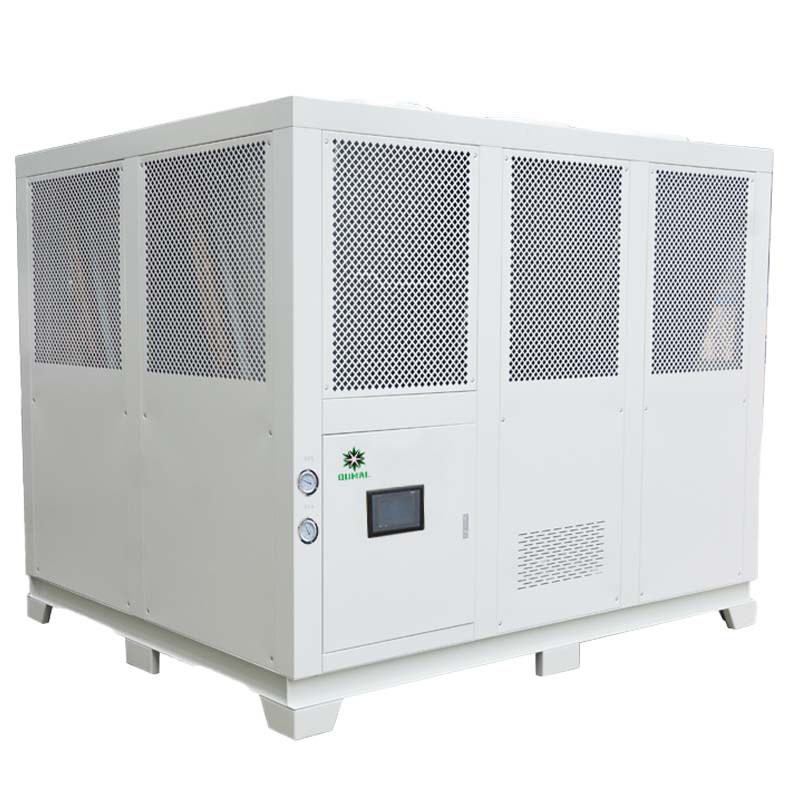
Una gestión adecuada del refrigerante y el aceite mantiene su enfriadora funcionando de manera eficiente y previene averías costosas. Es necesario controlar los niveles de refrigerante y el estado del aceite como parte de su plan de mantenimiento rutinario.
Debe comprobar los niveles de refrigerante siguiendo un método sistemático. Siga estos pasos para garantizar que su enfriadora funcione a pleno rendimiento:
Abra todas las válvulas de cierre de la unidad.
Conecte la manguera de vacío al puerto de carga de refrigerante en el tubo de succión del compresor y en el tubo de descarga del condensador.
Utilice una bomba de vacío para evacuar las tuberías del sistema.
Una vez alcanzado el vacío requerido, cargue el sistema de refrigeración a través de la válvula de cierre del tubo de descarga del condensador.
Consulte la placa de características de la unidad para conocer la cantidad correcta de refrigerante.
Para reabastecer el sistema, conecte la botella de carga de refrigerante al tubo de succión del compresor, encienda el sistema y añada refrigerante lentamente mientras controla las presiones.
Consejo: Controle siempre los niveles de refrigerante durante el funcionamiento para evitar una carga insuficiente o excesiva, lo que puede reducir la eficiencia.
Debe inspeccionar su enfriadora periódicamente para detectar fugas de refrigerante. Estas suelen deberse a una carga baja de refrigerante, serpentines del condensador sucios o un flujo insuficiente de agua de refrigeración. La detección temprana ayuda a prevenir la ineficiencia del sistema y posibles daños.
Presta atención a los sonidos inusuales cerca de las conexiones.
Busque manchas de aceite o residuos alrededor de las conexiones.
Utilice detectores electrónicos de fugas para obtener resultados precisos.
Es necesario controlar los niveles de aceite para proteger el compresor del enfriador. La frecuencia depende de la aplicación:
Uso ligero: Cambiar el aceite cada 2.000 a 4.000 horas de funcionamiento.
Uso medio: Cambiar el aceite cada 1.500 a 2.500 horas de funcionamiento.
Uso intensivo: Cambie el aceite cada 1.000 a 1.500 horas de funcionamiento.
Las revisiones periódicas del aceite ayudan a evitar daños en el compresor y a prolongar la vida útil de su enfriadora.
Los componentes eléctricos desempeñan un papel fundamental en la fiabilidad de su enfriadora. Las inspecciones periódicas le ayudan a detectar problemas a tiempo y a evitar costosos tiempos de inactividad.
Debe inspeccionar todas las conexiones eléctricas, terminales y cableado. Apriete las conexiones flojas y reemplace los componentes dañados para evitar fallas. Asegúrese de que todos los controles e interruptores funcionen correctamente, ya que cualquier mal funcionamiento puede afectar el rendimiento de su enfriadora. Busque signos de desgaste en los cables de alimentación y verifique que todos los componentes eléctricos funcionen correctamente.
A continuación, se presentan las mejores prácticas para inspeccionar las conexiones y los controles eléctricos:
|
Práctica |
Descripción |
|---|---|
|
Inspeccione el cableado eléctrico. |
Asegúrese de que todo el cableado esté intacto y sin daños. |
|
Verifique las conexiones eléctricas y de tierra. |
Compruebe que todas las conexiones estén seguras y apriételas si es necesario. |
|
Comprobar el estado de los contactores |
Busque decoloración o picaduras y reemplácelo si es necesario. |
|
Prueba del funcionamiento de los controles |
Verifique que los temporizadores, relés y controles de seguridad funcionen correctamente. |
|
Limpiar el armario eléctrico |
Elimine la humedad, la suciedad y los residuos para prevenir problemas. |
Consejo: Compruebe siempre el funcionamiento del calentador del cárter midiendo el consumo de amperios para confirmar su correcto funcionamiento.
Es necesario inspeccionar el sistema de control del ventilador para garantizar el funcionamiento fiable del enfriador. El mantenimiento regular minimiza el riesgo de averías inesperadas. Compruebe que todos los componentes del ventilador funcionen correctamente. Sustituya las piezas desgastadas y lubrique las piezas móviles para mejorar la fiabilidad del sistema. Inspeccione las conexiones eléctricas de los ventiladores y apriételas según sea necesario.
Medir el voltaje del motor del ventilador ayuda a detectar problemas eléctricos antes de que causen fallas. Use un multímetro para verificar el voltaje y la secuencia de fases según las especificaciones del fabricante. Las lecturas de voltaje consistentes indican un funcionamiento estable. Si observa irregularidades, soluciónelas de inmediato para proteger su enfriadora y mantener un rendimiento eficiente.
Un flujo y tratamiento adecuados del agua son esenciales para el correcto mantenimiento de los enfriadores. Es necesario prestar atención a las entradas y salidas de agua, así como a la calidad del agua, para prevenir problemas de rendimiento y prolongar la vida útil del equipo.
Debe inspeccionar periódicamente las entradas y salidas de agua para garantizar un funcionamiento correcto. Las obstrucciones pueden reducir la circulación del agua y afectar la eficiencia del enfriador. Para un mantenimiento eficaz del enfriador industrial, siga estos pasos:
Limpie los filtros del enfriador y de la torre de refrigeración para eliminar sedimentos y algas.
Compruebe si hay residuos o acumulación en las entradas y salidas.
Controle el caudal de agua y solucione cualquier descenso repentino.
El mantenimiento regular de estos componentes le ayudará a evitar reparaciones costosas y a mantener un rendimiento óptimo.
El tratamiento del agua desempeña un papel vital en el mantenimiento de los enfriadores. Se pueden utilizar varios métodos para prevenir la acumulación de incrustaciones y la corrosión:
|
Método |
Descripción |
|---|---|
|
Equipos para ablandar el agua |
Reduce la escala e mediante el ablandamiento de las fuentes de agua. |
|
Inhibidores de corrosión |
Forma una película protectora sobre las superficies metálicas para prevenir la corrosión. |
|
Inhibidores de incrustaciones |
Previene la precipitación de sales de calcio y magnesio, reduciendo la formación de incrustaciones. |
|
Biocidas |
Controla el crecimiento de microorganismos, garantizando una mejor calidad del agua. |
Debe seleccionar la combinación adecuada para su sistema que permita un mantenimiento a largo plazo.
Descuidar el tratamiento del agua puede provocar incrustaciones, suciedad y corrosión en su enfriadora. Estos problemas reducen la eficiencia de la transferencia de calor y aumentan la presión, lo que obliga al compresor a trabajar más. Con el tiempo, esta carga de trabajo adicional acorta la vida útil del equipo. Los contaminantes e impurezas también aumentan la resistencia térmica, lo que reduce aún más la eficiencia. Debe limpiar los tubos al menos una vez al año y mantener limpia el agua del condensador para prevenir estos problemas. Un mantenimiento constante en esta área garantiza un rendimiento fiable de la enfriadora y respalda su plan de mantenimiento general.
Es necesario controlar la diferencia de temperatura del agua del evaporador para mantener un rendimiento óptimo en su enfriadora. Los estándares de la industria recomiendan una diferencia de temperatura típica de 10 °F (5,5 K) en condiciones de carga máxima. Este valor garantiza una transferencia de calor eficiente y una refrigeración constante. Si observa alguna desviación de este estándar, debe investigar las posibles causas, como intercambiadores de calor obstruidos o un flujo de agua inadecuado. Las revisiones periódicas le ayudan a identificar problemas a tiempo y a mantener la eficacia de su programa de mantenimiento.
Mantenga una diferencia de temperatura de 10 °F para el agua del evaporador.
Compruebe las lecturas de temperatura durante el mantenimiento rutinario.
Investigue de inmediato cualquier diferencia de temperatura anormal.
La monitorización constante de la diferencia de temperatura del agua del evaporador ayuda a prevenir fallos en el sistema de refrigeración y garantiza un funcionamiento fiable.
Puede utilizar los datos de rendimiento para detectar señales tempranas de mal funcionamiento del enfriador. El seguimiento de las métricas clave le permite identificar ineficiencias y solucionar problemas antes de que se agraven. Concéntrese en el IPLV (Valor Integrado de Carga Parcial) para evaluar la eficiencia bajo cargas variables, no solo el COP a plena carga. Las normativas establecen umbrales mínimos de eficiencia e influyen en el diseño del enfriador, por lo que debe mantenerse informado.
|
Parámetro |
Descripción |
|---|---|
|
Vibración del compresor |
Detecta el desgaste o la desalineación del compresor. |
|
Consumo de amperios |
Identifica ineficiencias o sobrecargas eléctricas. |
|
Temperaturas de descarga y succión |
Evalúa el flujo de refrigerante y la eficiencia del sistema. |
|
Temperaturas de aproximación |
Indica posibles problemas de ensuciamiento o de flujo en los intercambiadores de calor. |
|
Presión y temperatura del aceite |
Garantiza la correcta lubricación y refrigeración. |
|
Subenfriamiento/sobrecalentamiento del refrigerante |
Evita las ineficiencias del sistema. |
|
Caudales de agua |
Confirma que la refrigeración es óptima y que el sistema está en buen estado. |
|
Eficiencia en kW/tonelada |
Evalúa la eficiencia energética general. |
Debe supervisar el rendimiento del sistema con regularidad y utilizar las tendencias de datos para diagnosticar problemas. Los técnicos rastrean los problemas hasta los subsistemas y se centran en los componentes de alto riesgo según sus modos de fallo. Un programa de mantenimiento proactivo le ayuda a mantener la fiabilidad y la eficiencia del sistema de refrigeración.
Debe programar el mantenimiento de sus enfriadoras industriales para un servicio profesional cuando surjan problemas complejos o alcance los hitos de inspección anuales. Algunas tareas, como la detección de fugas de refrigerante o el diagnóstico eléctrico, requieren herramientas y experiencia especializadas. Los técnicos profesionales le ayudan a prevenir costosos tiempos de inactividad al identificar posibles problemas antes de que interrumpan las operaciones. Las enfriadoras con un mantenimiento adecuado ofrecen un control de temperatura constante, lo que protege la calidad del producto en sus instalaciones. Las inspecciones periódicas también le ayudan a cumplir con las normativas ambientales al detectar fugas de refrigerante a tiempo. La seguridad sigue siendo una prioridad, y el servicio profesional descubre riesgos que podrían pasar desapercibidos durante las revisiones rutinarias.
Considere estas ventajas del mantenimiento profesional de enfriadoras industriales:
Evitar costosos tiempos de inactividad abordando los problemas a tiempo.
Garantizar la calidad del producto mediante un control de temperatura estable.
Cumplimiento de las normas medioambientales con detección de fugas inmediata.
Crear un lugar de trabajo más seguro mediante inspecciones exhaustivas.
Si observa problemas de rendimiento persistentes, ruidos anormales o alarmas repetidas, llame a un técnico cualificado para la reparación de su enfriadora. Las visitas anuales o semestrales de expertos garantizan el funcionamiento eficiente de su sistema y prolongan su vida útil.
Durante una visita de servicio profesional, recibirá un plan de mantenimiento adaptado a su tipo de enfriadora y a las recomendaciones del fabricante. Los técnicos realizan tareas esenciales de mantenimiento de enfriadoras industriales, como la comprobación de la carga de refrigerante, los niveles de aceite, las conexiones eléctricas y los controles. Las inspecciones anuales pueden incluir procedimientos avanzados como pruebas de corrientes de Foucault y análisis de aceite. Los técnicos limpian las superficies de intercambio de calor y garantizan una lubricación adecuada para mantener un rendimiento óptimo.
Debe esperar que el proveedor de servicios documente todos los hallazgos y recomiende las reparaciones necesarias para su enfriadora. Elija proveedores con experiencia en el mantenimiento de enfriadoras industriales y una sólida reputación de confiabilidad. Pregunte por sus certificaciones y solicite referencias para garantizar un servicio de alta calidad para su equipo.
Usted garantiza la fiabilidad enfriador de tornillo refrigerado por aire El rendimiento se logra siguiendo un programa de mantenimiento proactivo del sistema de refrigeración. La inspección, limpieza y monitorización periódicas ofrecen los siguientes beneficios:
Máxima eficiencia y menor consumo de energía.
Menos reparaciones y mayor vida útil del enfriador.
Actualice sus prácticas de mantenimiento para mejorar la fiabilidad, cumplir con la normativa y lograr ahorros de costes a largo plazo.
Debe programar el mantenimiento de su enfriadora mensualmente y dos veces al año. Esta rutina mantiene la eficiencia de su enfriadora de tornillo refrigerada por aire y previene averías inesperadas.
Si nota ruidos anormales, una disminución en la refrigeración o alarmas repetidas, significa que su enfriador de tornillo refrigerado por aire necesita mantenimiento urgente.
Usted puede realizar tareas básicas de mantenimiento del enfriador, como la limpieza y las inspecciones. Para problemas más complejos, llame a un profesional para proteger su enfriador y garantizar un mantenimiento adecuado.



 es
es en
en